How to Win at Codenames: 7 Tips That Also Build Vocabulary
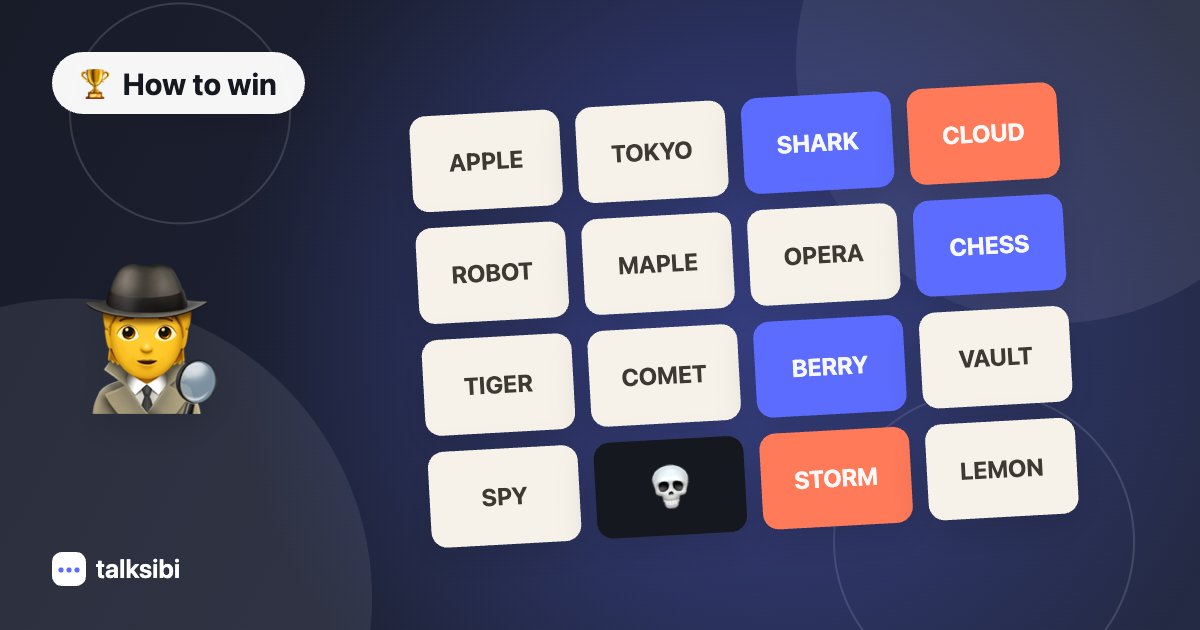
Codenames-style games look like luck, but the same players keep winning — because clue-giving and guessing are skills — word skills, at heart, which is why the strategies below double as a quiet vocabulary workout. Here are seven strategies that reliably raise your win rate, whether you're the spymaster or a guesser.
1. Spymasters: guard against the assassin first
Before hunting for clever links, find the assassin word and make sure your clue can't point at it. One accidental assassin clue loses the whole game — no comeback. Safe beats clever, every time.
2. Two words you'll get beats four you might
A guaranteed 2-word clue outscores a risky 4-word clue over a full game. Only reach for the big number when the board genuinely hands it to you.
3. Clue for your team's brains, not your own
Your clever connection is worthless if your teammates don't see it. Picture each guesser hearing your word. If it needs explaining, it's a trap you set for yourself. In a mixed-language team that goes double: idioms and puns land unevenly for second-language players, so lean on concrete nouns everyone owns.
4. Guessers: start with the word you're surest of
Tap your most confident word first. If you're right, you've earned momentum and information about the rest of the clue.
5. Use — but respect — the bonus guess
You always get the clue number plus one guess. That bonus is best spent picking up a word you missed from an earlier clue, not gambling on a fresh hunch.
6. Stop while you're ahead
Got both words from a "2" clue? Stop. Greedily guessing a third unclued word is how teams hand points — or the game — to their opponents.
7. Play the scoreboard
If the other team is one word from winning, take the safe guaranteed clue and deny them the turn. Track how many words each team has left and let it dictate your risk.
The eighth strategy: play in a second language
Look back at those seven tips and notice what they share: every one is a word exercise. Guarding the assassin means holding all of a word's meanings in mind at once. Cluing for your team's brains means predicting which association fires first. That rummaging through meanings, near-synonyms and the webs between words is what language teachers call retrieval and association practice — the exact muscle you build when you learn a language. Codenames doesn't just reward a broad vocabulary; it trains one.
Which points to a way of getting better that is also genuinely useful: play with simple words in a language you're learning. Clue-giving in beginner German is hard mode — you reach for the linking word, hit the gap, and never forget the word that fills it, and German's habit of stacking small words into compounds is practically clue training on its own, which is one reason word games sit on our learn German hub. And if English isn't your first language, ordinary English Codenames already is the workout: every clue is retrieval under pressure, and the guessers' arguments are the fast, idiomatic listening practice English learners find hardest to come by. Keep the board to common, concrete words and let the strongest speaker guess first.
It cuts the other way too: bilingual players tend to make unnerving spymasters, spotting association routes a one-language team never sees. If the idea appeals, read how to learn a language just by playing games — the TalkSibi community is full of native speakers happy to be your sparring partners.
Put it into practice
Strategy sticks through playing, not reading. Start a free TalkSibi game, try the "two safe words" and "stop while ahead" rules tonight, and watch how quickly your team starts winning.
🎮 Play TalkSibi free — no sign-up