Practise languages live with real people
Why live practice is the part that matters
You can study a language for years and still seize up when a waiter answers faster than expected. The gap is not vocabulary — it is that comprehension and speech under time pressure are separate skills, and neither one improves from flashcards. They improve when someone is waiting for you to finish a sentence.
TalkSibi is a free language-exchange community where you practise a language with real native speakers over chat, voice and video calls and live voice parties. Everything below happens live, with a person, in real time.
The four live surfaces
Live language parties
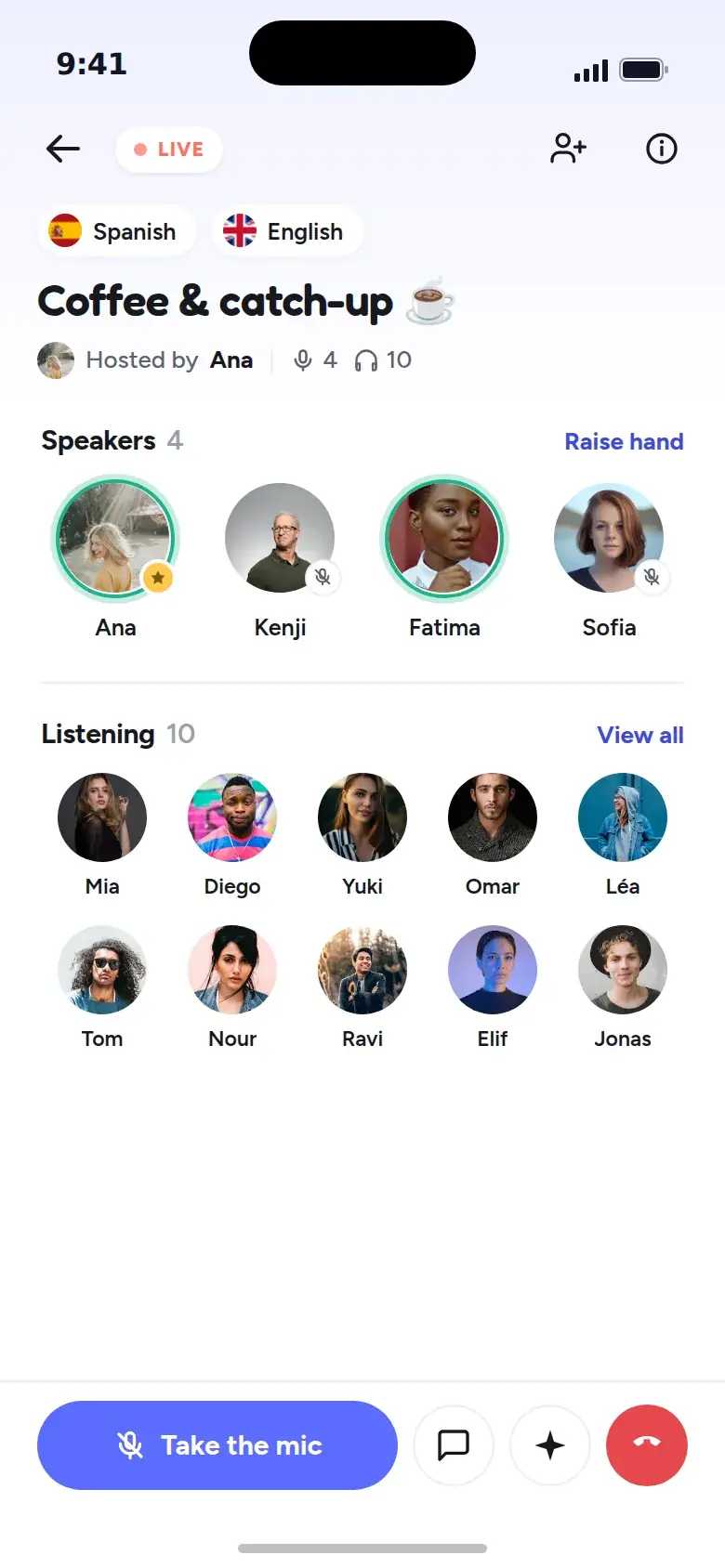
Drop-in voice rooms with several members in them, around a language or a topic. Listen for as long as you like; raise your hand for the mic when you want it. The lowest-pressure way to start, because the conversation is already running without you. More on parties.
One-to-one voice and video calls
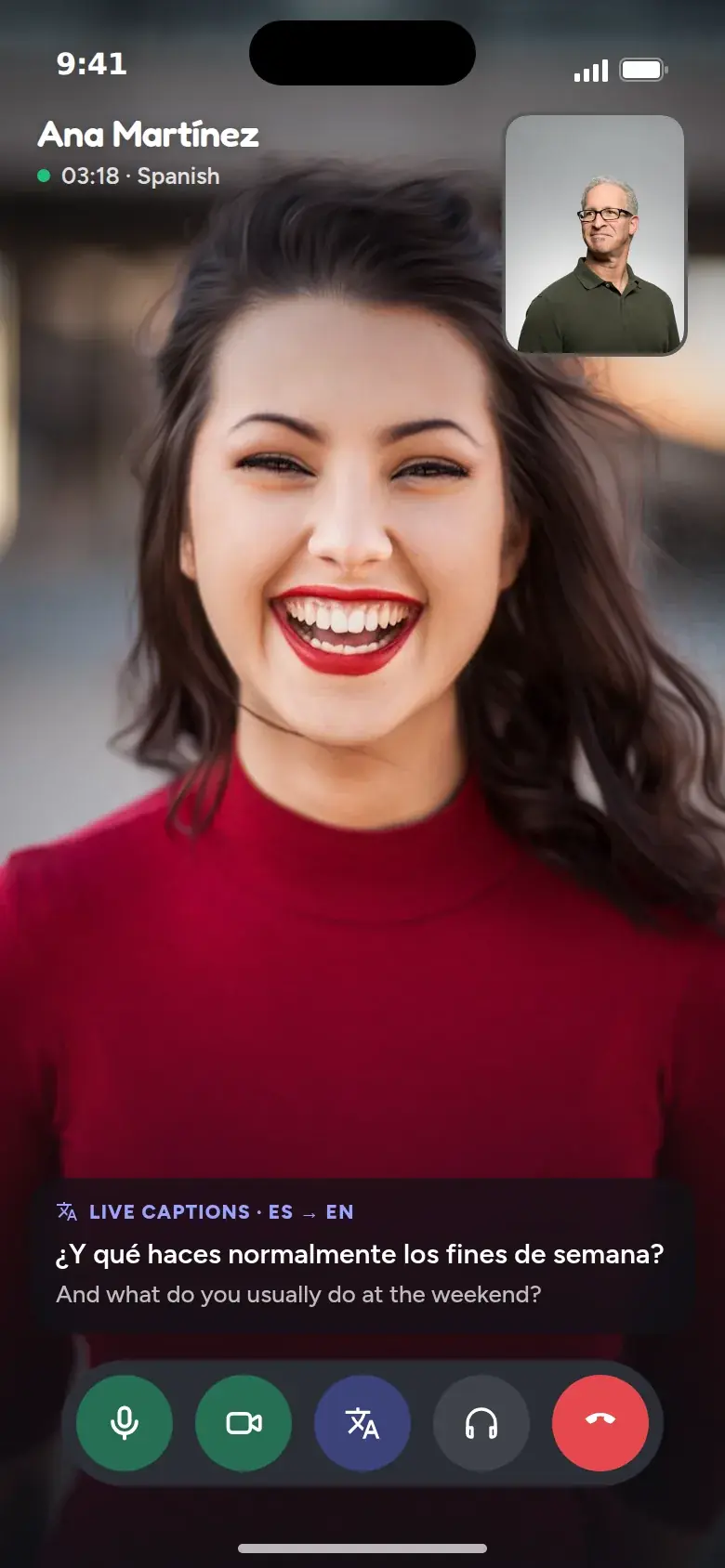
When you want a real conversation with one person. Calls carry live captions translated into your language as you talk, which is the difference between following a fast native speaker and nodding politely. Video is optional and always stays optional — start on voice and turn the camera on if and when you want to.
Text chat, for when speaking is too much today
Chat with one-tap translation on the other person's messages. It is a legitimate way in: it builds the relationship that makes a first call bearable, and plenty of members talk in text for weeks before they call.
AI language experts, 24/7
The honest problem with practising with real people is that real people are asleep. AI language experts hold a genuine conversation in your target language at any hour and correct you gently while you are talking, rather than marking you at the end. They are not a replacement for a person — they are what keeps the habit alive on the nights nobody is online, which is when most people quietly stop.
What to do in your first live session
Keep it short and specific. Twenty minutes is plenty and finishing while you still have energy is better than pushing to an hour. Split the time explicitly — ten minutes in each language — so neither person drifts into the easier one. Say up front how much correcting you want, because people's preferences differ wildly and nobody can guess. And if open conversation is the thing you dread, start with a game or a party rather than a call.
Who is here, and how it is kept safe
TalkSibi is for adults aged 18 and over. Every profile is photo-checked before it can message anyone, and Report and Block are on every screen — profile, chat, call and party. Calls are not recorded and parties are not monitored, which is why reporting matters; reports are confidential and a person reads them. The community guidelines set out what is expected and what happens when someone ignores it.
What it costs
TalkSibi is free to use, and no card is needed. Unlimited chat, unlimited voice calls, the language games, the live language parties, clubs, partner matching and the IELTS and TOEFL material are all free — there is no paid plan and nothing to unlock. Translation and the AI coach have a daily allowance, because each of those costs money every time it is used. Full detail on pricing.
Where it runs
TalkSibi works in any modern browser on a phone, tablet or laptop — nothing to install — and there are apps for iOS and Android if you would rather have one. You can also add the site to your home screen and it behaves like an app.
Practise live today
Join a party, start a call, or talk to an AI partner at three in the morning. Join TalkSibi free — 18+, photo-checked, no card needed.
Keep reading
Online language exchange · Live language parties · Speaking practice · The community · Practise speaking online
Common questions
How can I practise a language live online?
On TalkSibi you can drop into a live voice party with several members, start a one-to-one voice or video call with translated live captions, chat in text with one-tap translation, or talk to an AI language expert at any hour. All of it is free.
Do video calls have captions?
Yes. Voice and video calls carry live captions translated into your language as you speak, which makes a fast native speaker much easier to follow.
Is video required?
No. Video is always optional. Most calls start on voice and the camera only goes on if both people want it.
What if nobody is online in my language?
AI language experts are available 24/7 for a real conversation in your target language, with gentle correction as you talk. Live parties also run around the clock because members are spread across time zones.
How long should a live practice session be?
Twenty to thirty minutes is enough, especially at first. Splitting the time explicitly between the two languages stops the conversation drifting into whichever one is easier.