Codenames Word List: Word Packs, Fresh Boards & Vocabulary
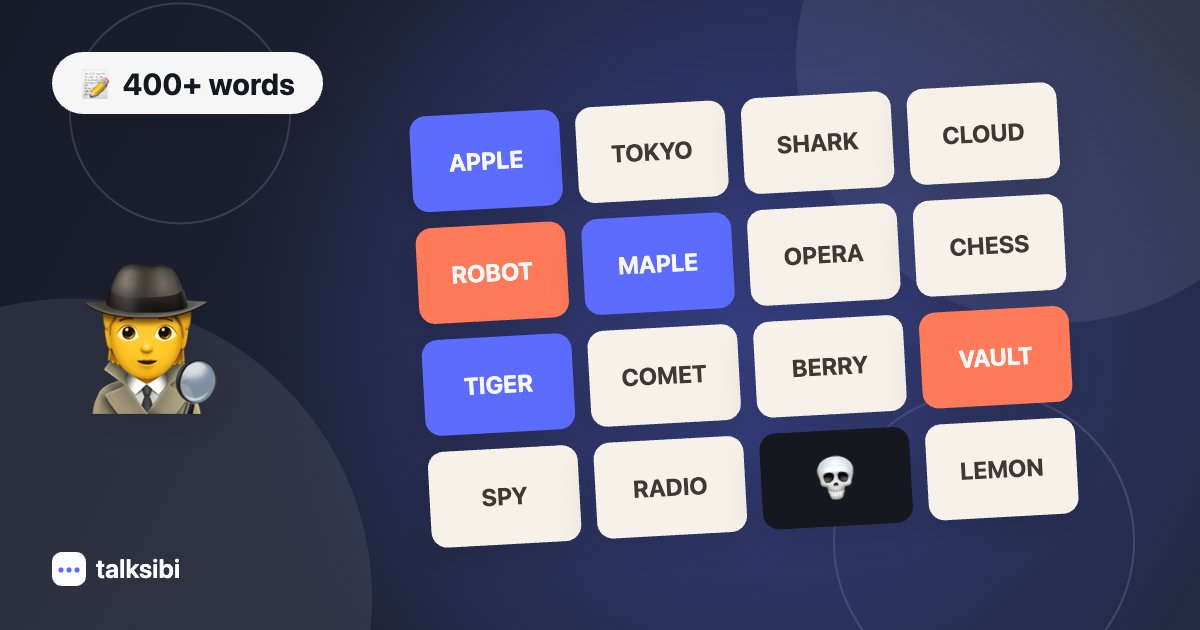
The magic of a Codenames-style game lives in its word list. Good words have double meanings, feel familiar, and spark those "wait, could that link to…" moments. Here's what makes a great word list — and how packs keep every board different.
What makes a good game word
The best words are common, concrete nouns with more than one meaning: BANK, STAR, BUG, PITCH, SPRING. That ambiguity is the whole game — is BANK the money kind or the river kind? A list of obscure or single-meaning words makes flat, clueless boards. Notice something else about BANK, STAR and SPRING, though: they're exactly the high-frequency, everyday words a language learner meets in their first months — more on why that matters below.
Why word packs matter
A single fixed list gets stale fast — you start recognising boards. The fix is a large pool split into themed packs: animals, food, travel, cities, countries, movies, sports and everyday objects. Draw 25 random words from a big enough pool and you'll almost never see the same board twice.
Themed packs change the whole vibe
Letting a group pick categories tailors the game to them: film buffs love a movies pack, families lean on easy everyday words, football fans want a sports pack. Same rules, totally different feel.
A great word list works in any language
Nothing about a good game word is unique to English. Every language has its BANKs: in Spanish, banco is both the bank you rob and the bench you sit on; in Korean, 배 (bae) manages to be a pear, a boat and a stomach all at once. Build a list of common, concrete, double-edged nouns in any language and the game works just as well — same ambiguity, same gasps.
That has a happy consequence: a Codenames board is more or less a beginner vocabulary syllabus laid out on a 5×5 grid. The qualities that make a word great for the game — everyday, concrete, familiar — are the qualities of the words a learner needs first, and themed packs mirror precisely how vocabulary is taught: food, animals, travel, things around the house. Play a round on an easy word list in the language you're learning and you walk away with 25 useful nouns plus the argument you had over each of them — and the argument is what makes them stick. Learners of Spanish get an especially rich seam of double meanings to mine; learners of Korean get short, punchy game words that are quick to read even early on.
Two tips if you try it: choose the easy everyday pack rather than the clever one, and give the spymaster seat to the strongest speaker first, so the clues model good usage. There's a full method in our guide to free games that teach a language, and the TalkSibi games shelf pairs this game with vocabulary sprints like Word Race that you can point directly at your target language.
How many words is enough?
For genuinely fresh boards you want hundreds of words at minimum. TalkSibi draws each 25-word board from a pool of 700+ across multiple categories, and lets the host choose which packs to include — so boards stay fresh and match your group's taste. Start a free game and pick your categories.
🎮 Play TalkSibi free — no sign-up