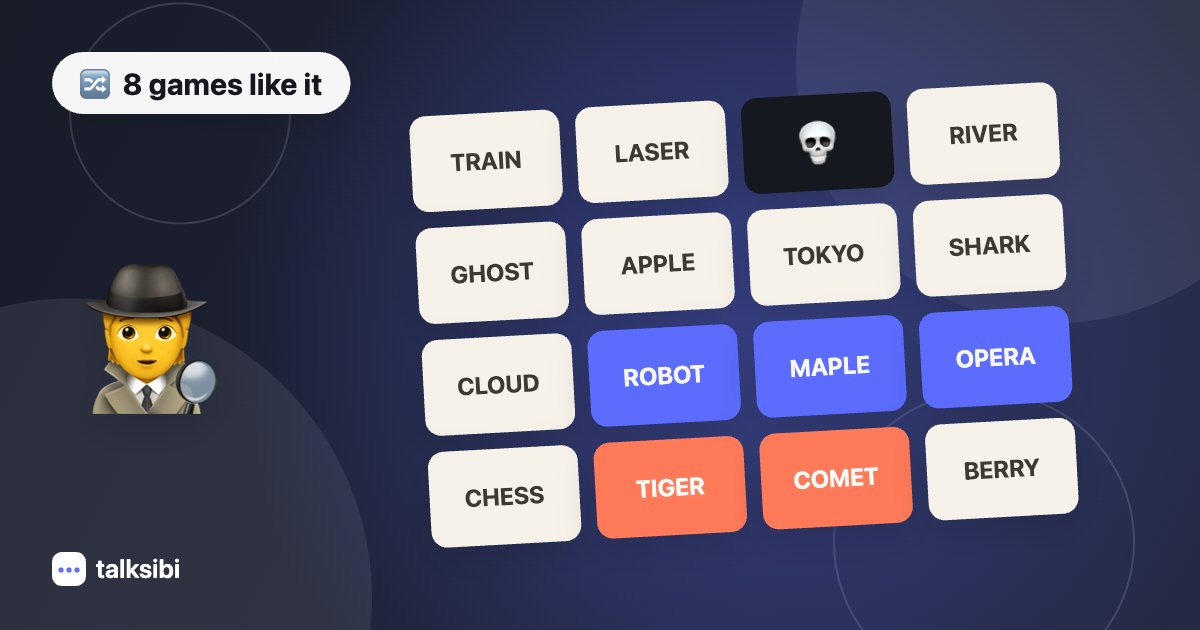
Word Games Like Codenames: Word Spies and More to Play Free
Word games like Codenames you can play free online: Word Spies first, then the other TalkSibi word games, and the board-game styles worth trying next.
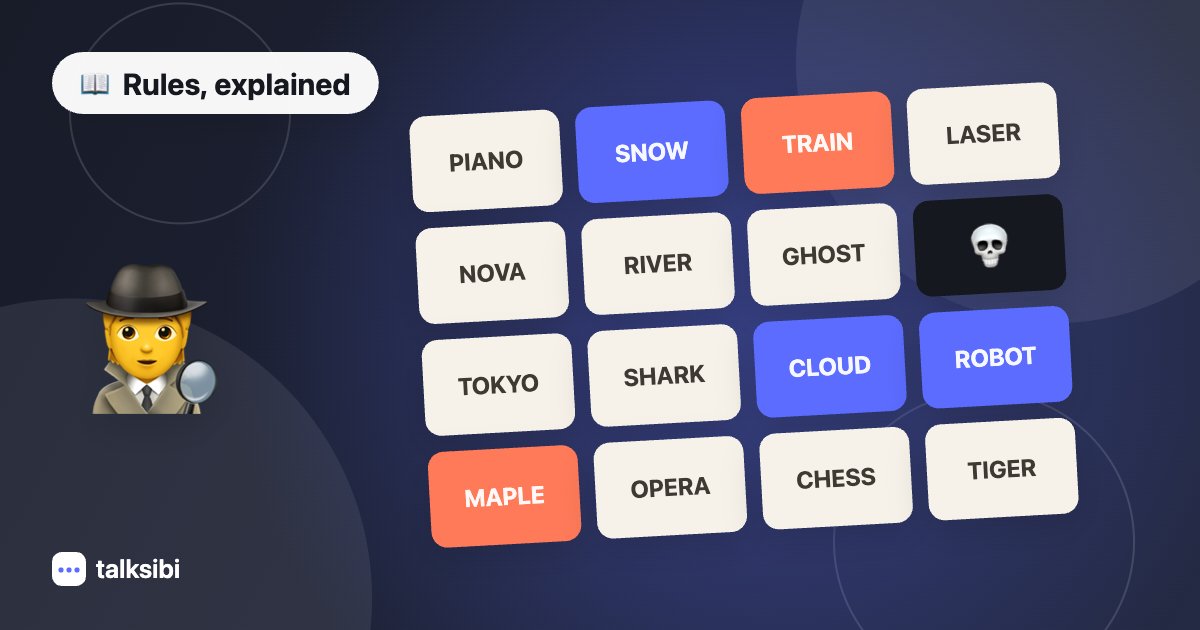
How to Play Word Spies: Codenames-Style Rules Explained
Word Spies rules, simply: teams, spymasters, one-word clues, guesses and the assassin, plus playing with two or four, tips to win and house rules to try.
Word Games to Play on a Video Call: Zoom, Meet, Teams or the Phone
Free word games for Zoom, Meet, Teams or a plain phone call: how each one plays, and which to pick for two people, families, big groups and work icebreakers.
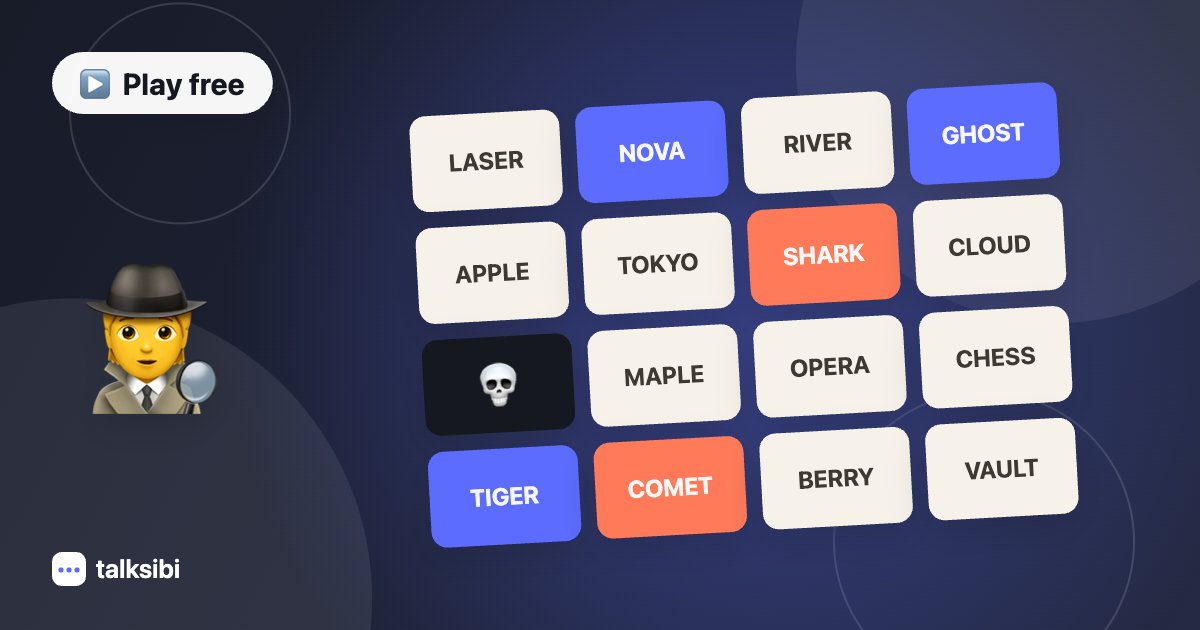
Word Spies: Play a Codenames-Style Word Game Online Free
Word Spies is our free Codenames-style word game: open a room, share a four-letter code and play on any phone or laptop. No download, no account needed.
How to pick a word game for your group
Two people. Pick a game where you take turns rather than race: a chain game, where each word starts with the last letter of the one before, or a guessing game where one of you describes a word without saying it. Turn-based games leave time to think, which matters even more if one of you is playing in a second language.
Three to six people. This is where team word games shine. In Word Spies, two teams each have a spymaster who gives one-word clues to point their team at their own words on a shared grid while steering clear of the assassin. One round takes ten to fifteen minutes and the rules fit in a sentence, so nobody needs to have played before. If the group is quieter, a drawing or describing game gets people talking without anyone being put on the spot.
Seven or more, or a video call. Split into two teams and keep turns short. On a call, choose games that need nothing but voices and a shared link: everyone opens the same room in a browser, so nobody has to install anything or share a screen. Name a timekeeper so that a long pause does not stall the whole group.
Playing in a language you are learning. Word games are unusually good practice because they make you search for words under a little pressure, which is exactly what a real conversation does. Agree before you start whether dictionaries are allowed, and let learners give clues in their own language when they are stuck: the point is to keep playing, not to be perfect. Short rounds work better than long ones, because the conversation in between rounds is where most of the practice happens.
Keeping it friendly. The best game night is one where the quietest player still gets a turn. Rotate the clue-giver every round, mix strong and new players on each team, and let a team ask for one extra clue when they are stuck rather than ending the round. If someone is new to a game, play one practice round where nothing counts. Most groups find the second game goes twice as fast as the first, so it is worth pushing through the slow start.
Where to start. The rules of every game on TalkSibi, with player counts, timers and scoring, are on How to play. For a longer list with setups for families, teams and couples, read word games to play over a video call. Every game is free to play in the browser, and a room link is all your friends need to join.